Overhead to Underground Conversion Hills District
A cable in the ground from the network to your meter board, clear of gums, roofs and second storeys.
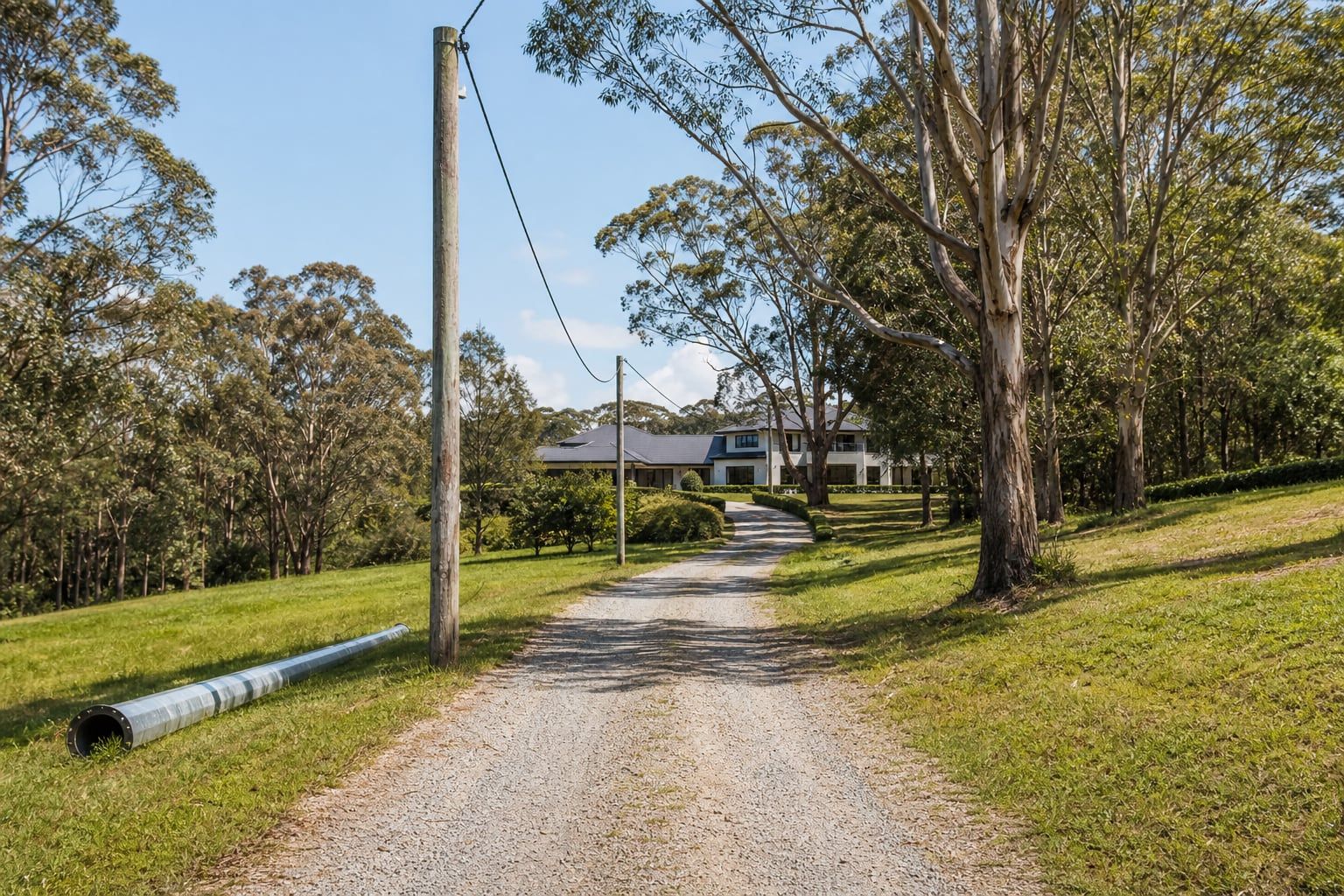
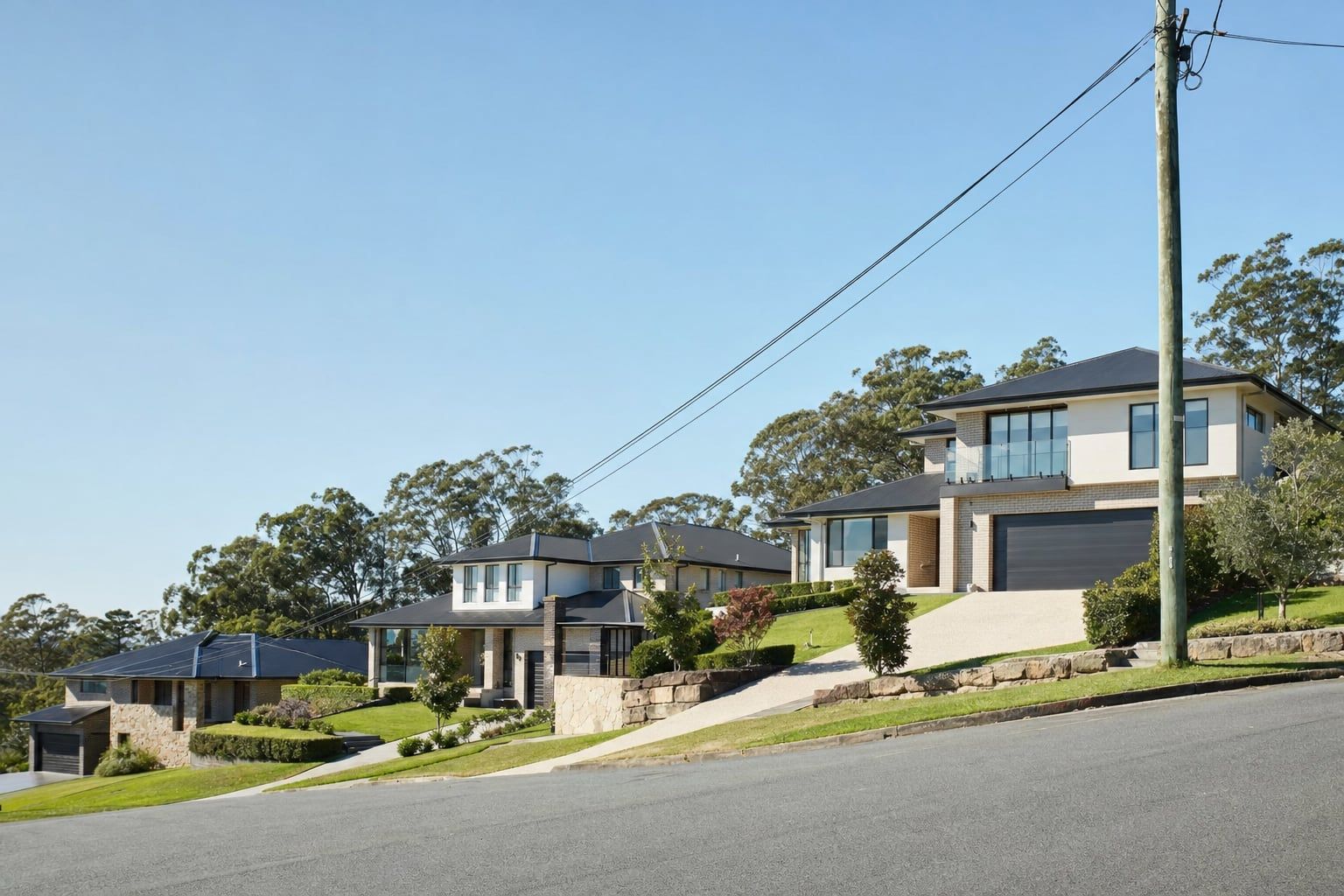
In the older Hills suburbs, homes are supplied by overhead service lines from street poles: across sloping front gardens, past tall gums and up to a bracket on the house. On acreage in Dural, Kenthurst and Glenhaven, power often travels further, over private poles and long private lines. Overhead lines get in the way of second storeys, catch branches in storms and limit where pools and decks can go. An overhead to underground conversion replaces them with a cable in conduit under the ground.
Why Hills owners go underground
- Knockdown rebuilds. New two-storey homes rarely suit the old line’s route, and the ground is already being dug.
- Second storeys and extensions. The line clashes with new upper floors, balconies and roofs.
- Pools and alfrescos. Lines across back yards limit where they can go.
- Trees and storms. Gums on Hills ridges drop limbs on lines.
- Acreage poles. Removing ageing private poles ends the maintenance.
- Street appeal. A new or renovated home looks better without a wire across the facade.
How the connection works
In older streets with overhead mains, the new cable usually runs to the base of the nearest suitable network pole and up it in protective conduit to the mains. In newer estates with underground mains, it connects at the boundary pit. On acreage, the connection point may be a pole at the road frontage, with a long trench to the house. Most of the Hills is on the Endeavour Energy network; Cherrybrook and parts of West Pennant Hills are on Ausgrid. We confirm the method with the right network before quoting.
The trench
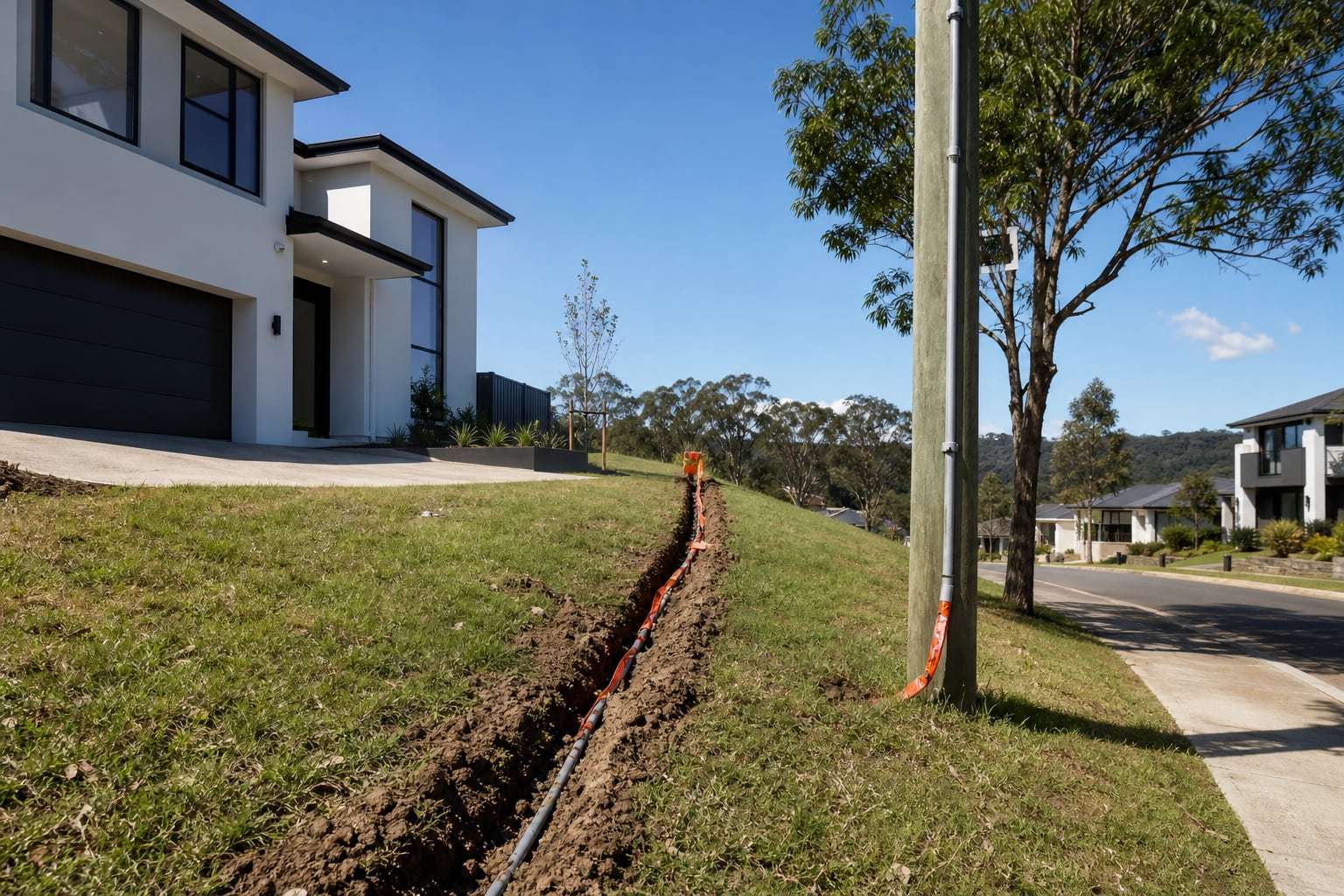
Hills blocks slope, often steeply, with retaining walls, stairs and terraced gardens. Sandstone and shale sit close to the surface on some ridges. We plan a route that avoids walls and rock where possible, cut where we must, and hand dig near tree roots and footings. Conduit goes in at the required depth with marker tape above it.
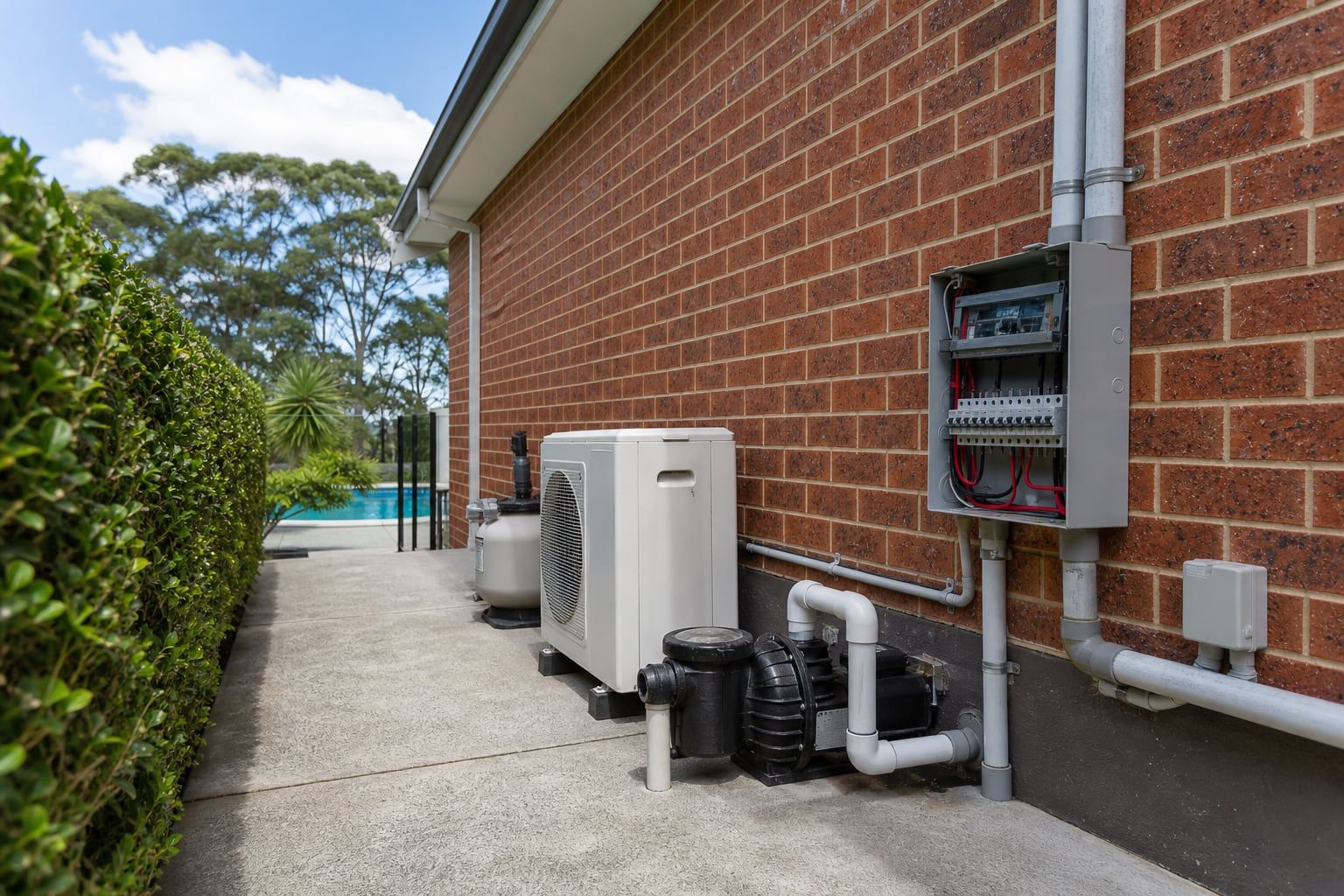
While the trench is open, think about capacity. A three phase power upgrade for a pool, EV chargers and two-level ducted air costs little extra at this stage, and a bigger cable now saves digging again later.
Connection day
We notify the network, isolate the supply, pull through and terminate the new cable, test and restore power. The old overhead line and bracket come down, along with any private power poles the new supply makes redundant. You get a certificate of compliance.
Knockdown rebuilds
On a rebuild, plan the underground supply with the builder at the start. We disconnect the old house, set up a temporary builders supply and connect the new supply when the meter board is ready.
Pools and landscaping
If a pool, driveway or landscaping project is coming, put the conduit in first. We coordinate with your pool builder and landscaper so nothing is dug twice.
How long it takes
A suburban trench is usually a day, plus a connection visit. Acreage runs are staged so you keep power until connection day.
Get a quote
Call the Hills District level 2 electrician team to map the route and get a fixed written price. We do a lot of undergrounding on rebuilds in level 2 electrician Castle Hill and Bella Vista.
Updated
What good overhead to underground conversion looks like
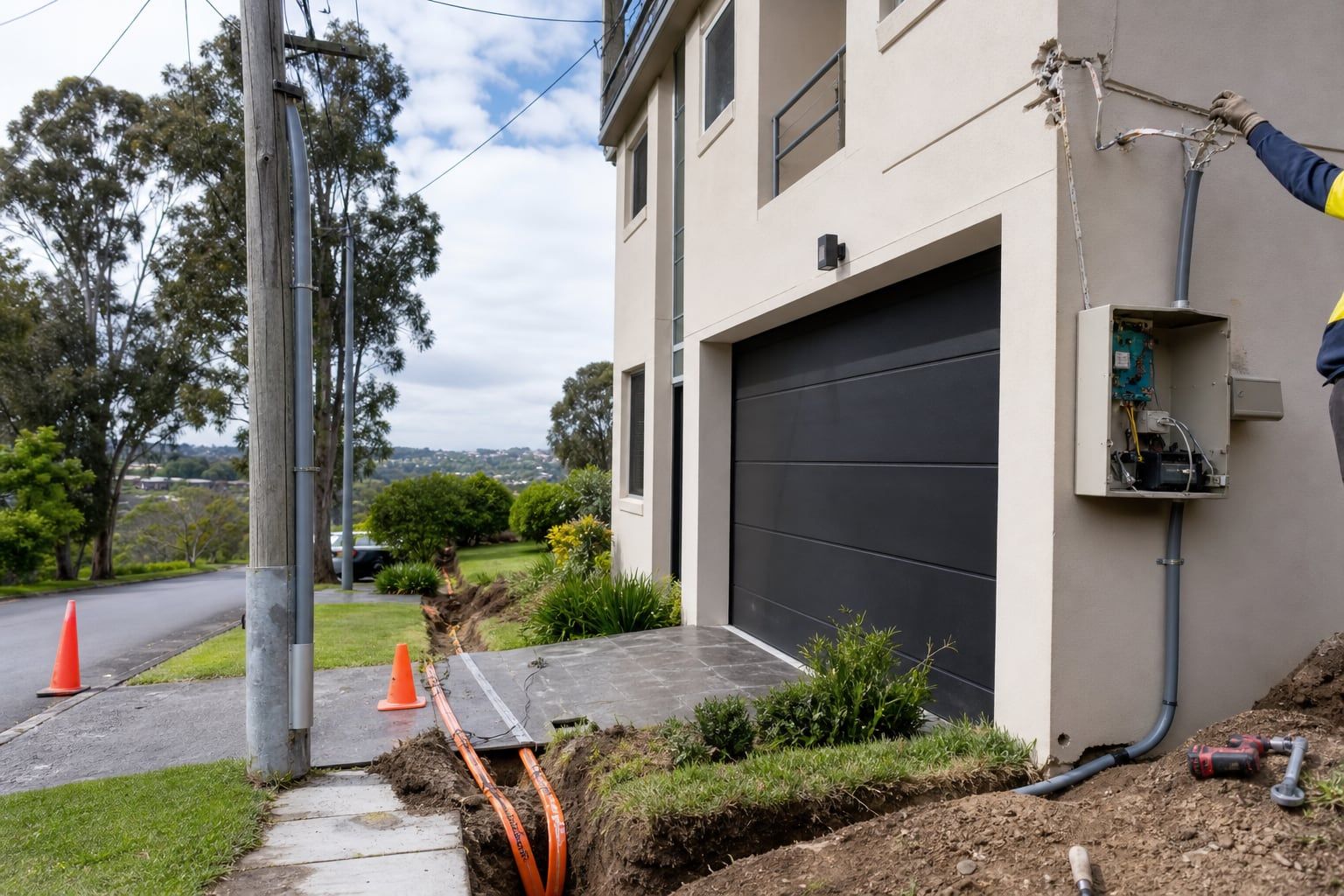
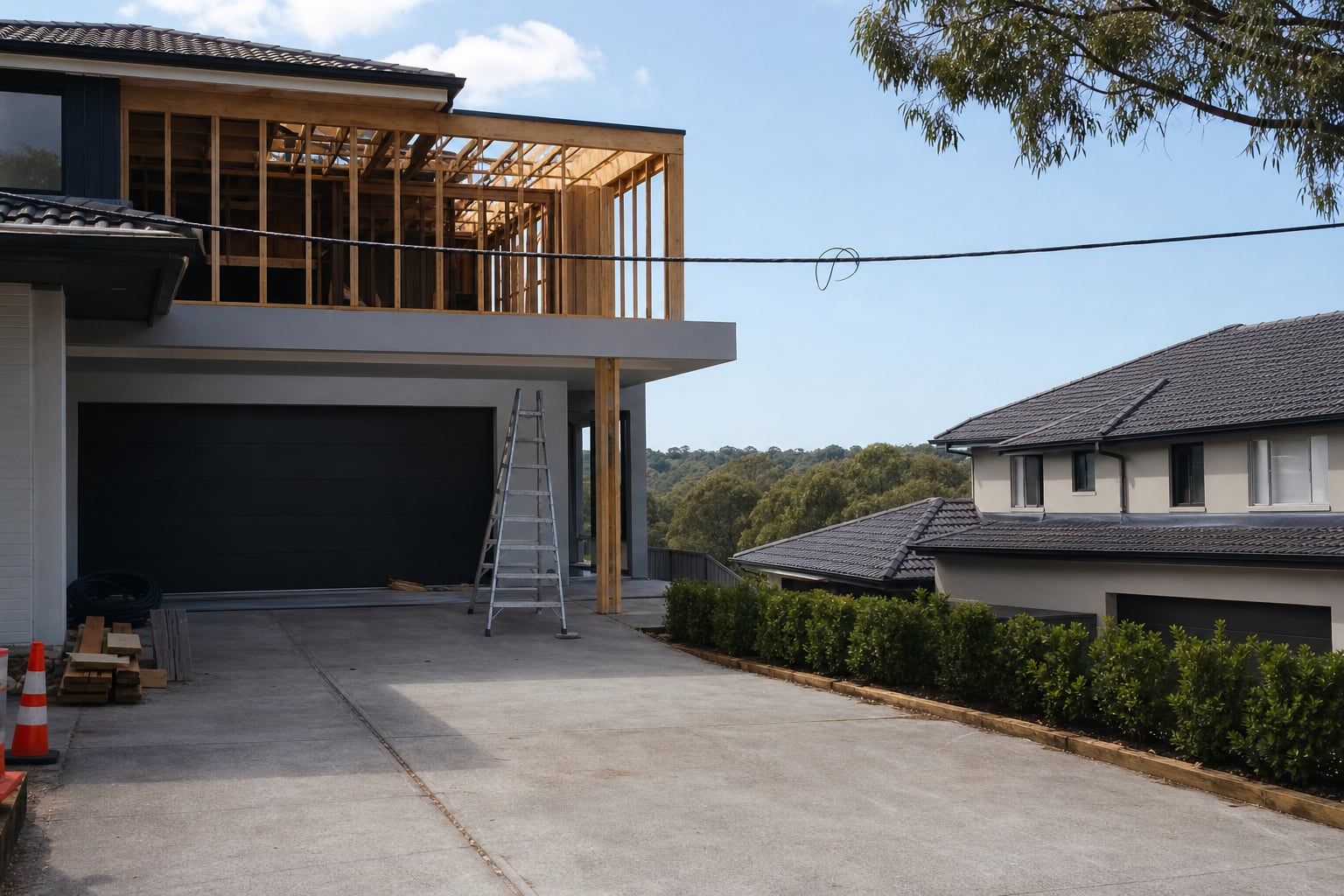
Overhead to Underground Conversion in the Hills District: step by step
- Map the routeWe find the connection point and plan the trench around driveways, pools, walls and trees.
- Check the connection methodWe confirm with the network whether it's a pit at the boundary or a cable up the nearest pole.
- Install conduitHeavy-duty conduit at the required depth with marker tape, trench backfilled and tidied.
- Cut overNew cable connected and tested, power restored, old line and poles removed.
Overhead to Underground Conversion across the Hills District
Overhead to Underground Conversion questions in the Hills District
Something else on your mind? Call 02 9158 9966 and ask.
Our block slopes steeply to the street. Does that make it harder?
It affects the route and the work, especially near retaining walls and stairs, but it's routine for us in the Hills.
Can the trench go in before the new pool or driveway?
Definitely. Laying conduit before the pool shell or pavers go in is the least disruptive and lowest-cost way to do it.
Our street already has underground mains. Do we need anything?
Your supply is already underground from the pit. If you need more capacity, we upgrade the cable from the pit.
Overhead to Underground Conversion guides for Hills District homeowners
- Pool and EV charger power upgrade: what Hills District homes need before plugging inHow pools, spas, heat pumps and EV chargers add to a home's load, how to tell if your supply can cope, and when you need new mains or three phase.
- Knockdown rebuild power connection in the Hills District: the steps from demolition to handoverEvery power step in a Hills knockdown rebuild, from the permanent disconnection to site power, network applications and the final connection.